
The Digital Clock is Ticking…
Australia, brace yourselves. December 10th is coming fast, and it’s about to bring a massive shift in the lives of every young Australian. Under 16 that is. We’re talking about the nation’s new law calling for a blanket social media ban for anyone under the age of 16. This isn’t a suggestion from the government. It’s a huge restructuring of childhood in the digital age. Its impact will effect the lives of children, parents, and, indeed, the big tech companies that have come to define our online existence.
What Sparked This Digital Revolution?

So why have we started down this uncharted course? There seems to be a growing concern over the strong influence that social media has on the developing minds of our young people. If you have kids or you don’t there is no doubt that social media and the internet in general is already having a massive impact on their behaviour, their values, and how they treat everyone.
Anthony Albanese has drawn a line in the sand, citing a “clear, causal link” between the relentless scroll of social media and the escalating rates of anxiety and mental health challenges among young Australians.
But the motivation seems to extend beyond statistics. It’s about reclaiming something precious: childhood itself. The aim is to create a protective shield against the insidious creep of cyberbullying, the corrupting influence of harmful content (the pornography and violence that lurks in the digital shadows), the predatory advances of online strangers, and the subtle, yet powerful, addictive design features that are rewiring young brains, disrupting sleep patterns, and diminishing academic performance.
There’s also a palpable sense that this policy isn’t solely the creation of politicians in Canberra. It’s a “grassroots movement,” a groundswell of parental anxiety, a collective desire to “give kids back their childhood,” to allow them the space and freedom to explore the world offline, to build genuine connections, and to simply be children, unburdened by the curated realities of the digital realm.
If this will actually stop the corrupting of young minds is something that we won’t be able to score for years. After all, it took years to get into this mess right?
So What Exactly Does the Ban Entail?
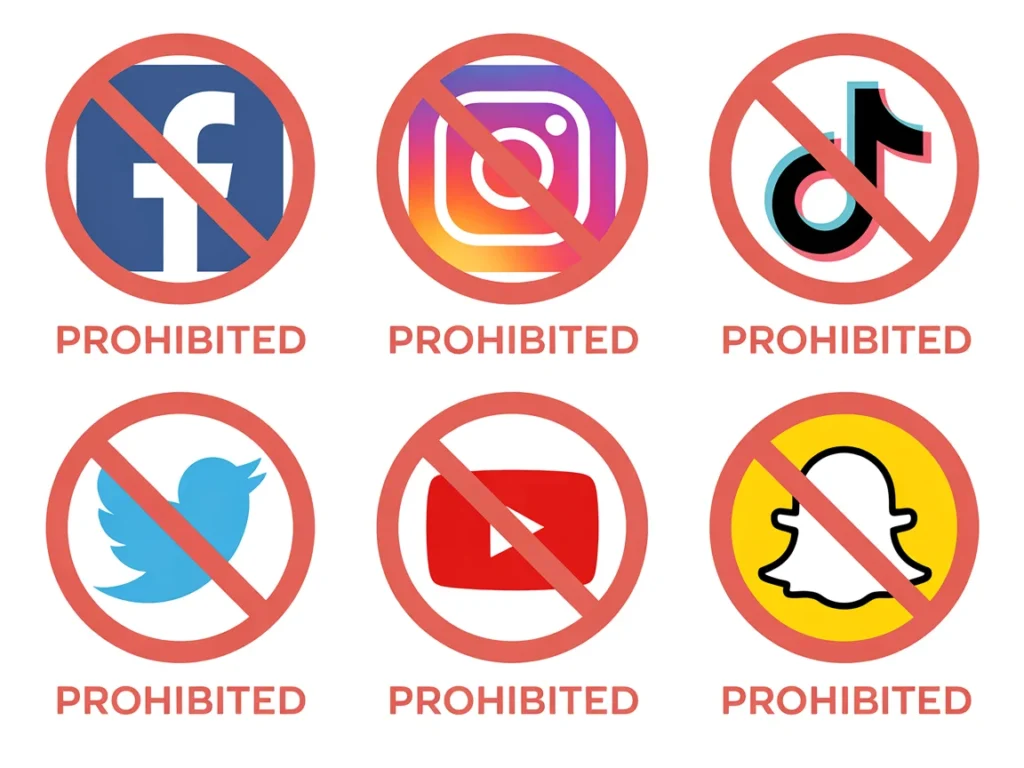
Let’s have a look into the ban’s architecture. Who does it cover? In short, anyone under 16 residing in Australia. There are no exceptions carved out for parental consent, no “grandfathering” clauses for existing underage accounts. The sweep is broad, encompassing a “dynamic” list of platforms that currently includes the giants of the social media landscape: Facebook, Instagram, Snapchat, TikTok, X, YouTube, Threads, Kick, and Reddit.
However, the digital world isn’t being entirely erased. Messaging apps (think WhatsApp, Messenger Kids and even Discord???), online games (for now, Roblox finds itself spared), and platforms dedicated to education or health services (Google Classroom, YouTube Kids, Kids Helpline) are generally exempt from the ban’s reach.
And who bears the responsibility for enforcement? It’s not the parents, not the children themselves. The onus falls squarely on the shoulders of the social media companies. Failure to take “reasonable steps” to prevent underage access carries a hefty price tag. The government will issue fines reaching a staggering $50 million. Yet, funnily enough, there are no penalties for the children or parents who might inadvertently circumvent the system.
The critical question, of course, is how will age be verified? The government stipulates the need for “age assurance processes” but stops short of mandating government-issued identification. This raises concerns about the data collected for verification, requiring that it be kept private and destroyed after use.
Cheers, Jeers, and Major Concerns

The ban has ignited a fiery debate, a clash of perspectives that reveals the inherent complexities of this digital intervention.
The government and a significant portion of the public – a resounding 77% – are firmly in the “It’s About Time!” camp. They see this as a bold, necessary step, a chance for Australia to lead the way in safeguarding its youth. It’s a sentiment echoed by countless parents who feel overwhelmed by the challenges of navigating their children’s digital lives.
But the critics are vocal, raising crucial questions about the ban’s potential consequences. Child advocates, including the Human Rights Commission, Save the Children, and Bravehearts, argue that the ban is a “too blunt an instrument” that could inadvertently reduce fundamental human rights like freedom of expression, access to information, and the ability to connect with others.
They fear that it might simply drive young people into the “darker corners” of the internet, towards less regulated and potentially more dangerous platforms. Concerns have also been raised about the impact on marginalised groups, particularly LGBTQIA+ and regional youth, who often rely on social media for vital support networks. Finally, there is the accusation of “rushed legislation,” of a lack of meaningful consultation with the young people most directly affected by the ban.
The tech companies themselves – Meta, TikTok, Snap – have voiced their own objections, decrying the “rushed process” and claiming a lack of meaningful industry input. They argue that enforcing an age 16 boundary is a “globally novel” undertaking, posing significant technical challenges. They have expressed deep reservations about the privacy implications of the extensive data collection that would be necessary for effective age verification.
Even experts and members of the opposition have weighed in, questioning the ban’s ultimate effectiveness, highlighting the potential for social isolation, and lamenting the lack of clarity surrounding implementation details.
The Road From Here

As December 10th approaches, the focus shifts to the future, to the practicalities of implementation, and the potential ripple effects of this experiment. The eSafety Commissioner will assume the role of digital watchdog, tasked with monitoring the situation, updating the list of targeted platforms (will Roblox remain unscathed? What about OpenAI’s Sora?), and issuing guidance to navigate this new landscape.
The effectiveness of age assurance technology will be critical. Early trials have shown promise, but also revealed accuracy limitations (“plus or minus 18 months”), pointing out the privacy concerns surrounding data collection.
The law includes a “review” clause, allowing an assessment of its effectiveness within two years. This suggests a willingness to adapt and adjust as the consequences of the ban become clearer.
The world is watching Australia’s experiment with keen interest. New Zealand, Denmark, and the EU are all contemplating similar laws, suggesting that Australia’s actions could trigger a global shift in attitudes towards youth and social media.
This ban is just one piece of a broader puzzle. It’s part of a wave of online safety reforms, including a new “Digital Duty of Care” that will place greater responsibility on platforms to protect their users.
And what can you, as parents and concerned citizens, do now?
- Talk to your kids: Engage in open and honest conversations about the changes, acknowledging their potential feelings of isolation and exploring alternative ways to connect with friends and family.
- Prepare for account deactivations: If your under-16 child has a social media account, advise them to download any data they wish to preserve before December 10th, 2025.
- Stay informed: The eSafety Commissioner’s website is a vital resource for guidance, updates, and information.
My Final Thought:
Our social media ban for those under 16 is a bold, some would say ballsy, experiment. It has the good intentions as we are all worried about the well-being of young people navigating the complexities of the digital age.
Yet, it is also a complex and multifaceted policy, with plenty of questions, debates, and potential unintended consequences. As the countdown continues, one thing is certain. The digital landscape for young Australians is on the cusp of a dramatic transformation. We all need to talk, learn, and to adapt, as we navigate this uncharted territory. After all, we are striving to create a safer and more balanced online world for our children.