Your Website Content Still Matters in 2026. Here's How to Structure It for AI Search
AI is now generating the search results your customers see. Here's what that means for your website content and exactly how to structure it so AI cites you instead of your competitors.
The most common thing I hear when I audit a small business website with no real content on it? “My last web guy told me SEO was dead.”
I get it. That advice was probably well-intentioned. But whoever said it got the diagnosis completely wrong, and right now in 2026, their clients are paying for it.
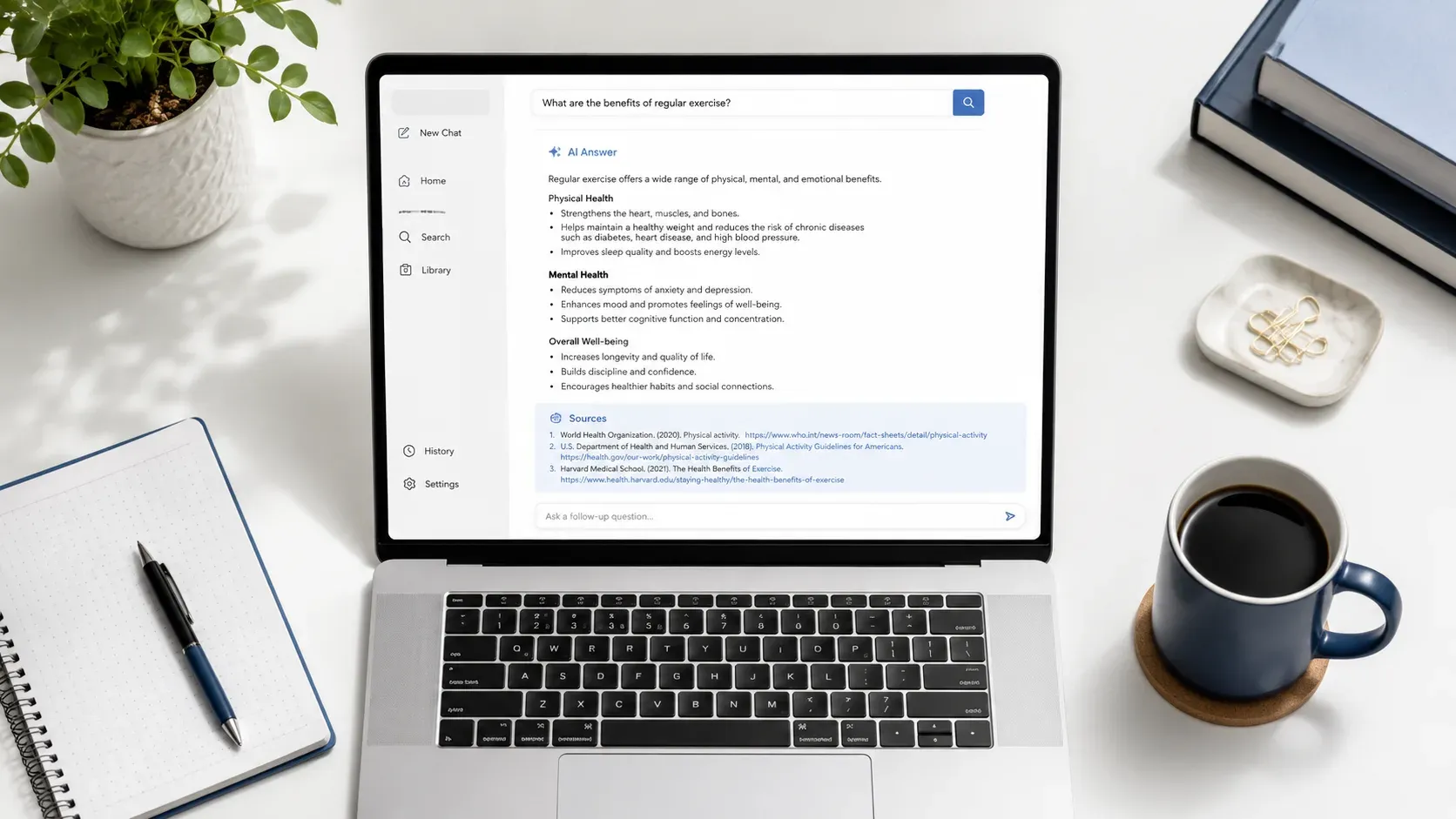
AI is generating the search results your customers see. Not sometime soon. Now. Whether someone’s searching on Google or asking ChatGPT, the answer they get back is written by an AI that pulled from a handful of sources it decided to trust. Your website is a potential source. The question is whether AI is going to cite you or skip you entirely.
Here’s what’s actually changed, and how to structure your content so AI picks you.
Most small business websites are invisible to AI before they even start
When I look at a small business website that’s struggling, it usually falls into one of three categories. There’s no content at all, just a homepage, an about page, and a contact form. Or there is content but it’s thin and vague, the kind of stuff that could describe any business in any town. Or there’s decent content but it hasn’t been touched in years. All three have the same problem: there’s nothing for AI to cite.
AI search visits grew 42.8% year over year, rising from 15.6 billion to 27.4 billion between Q1 2025 and Q1 2026 (Contently, 2026). And according to G2’s April 2026 research, 51% of B2B buyers now start their research with an AI chatbot more often than with Google (G2, 2026). Your customers are asking AI who to hire before they ever open a search engine. If your site gives AI nothing to work with, you don’t exist in that conversation.
Getting into the result set is the easy part
In traditional search, ranking is brutal. Humans click through a few results and that’s it — if you’re not on page one, you barely exist. AI search works differently. When AI generates an answer, it might consider hundreds of pages before writing its response. So if your content is reasonably relevant and your website has some basic authority, you’ll probably be in the mix.
Getting into the mix is not where people are losing.
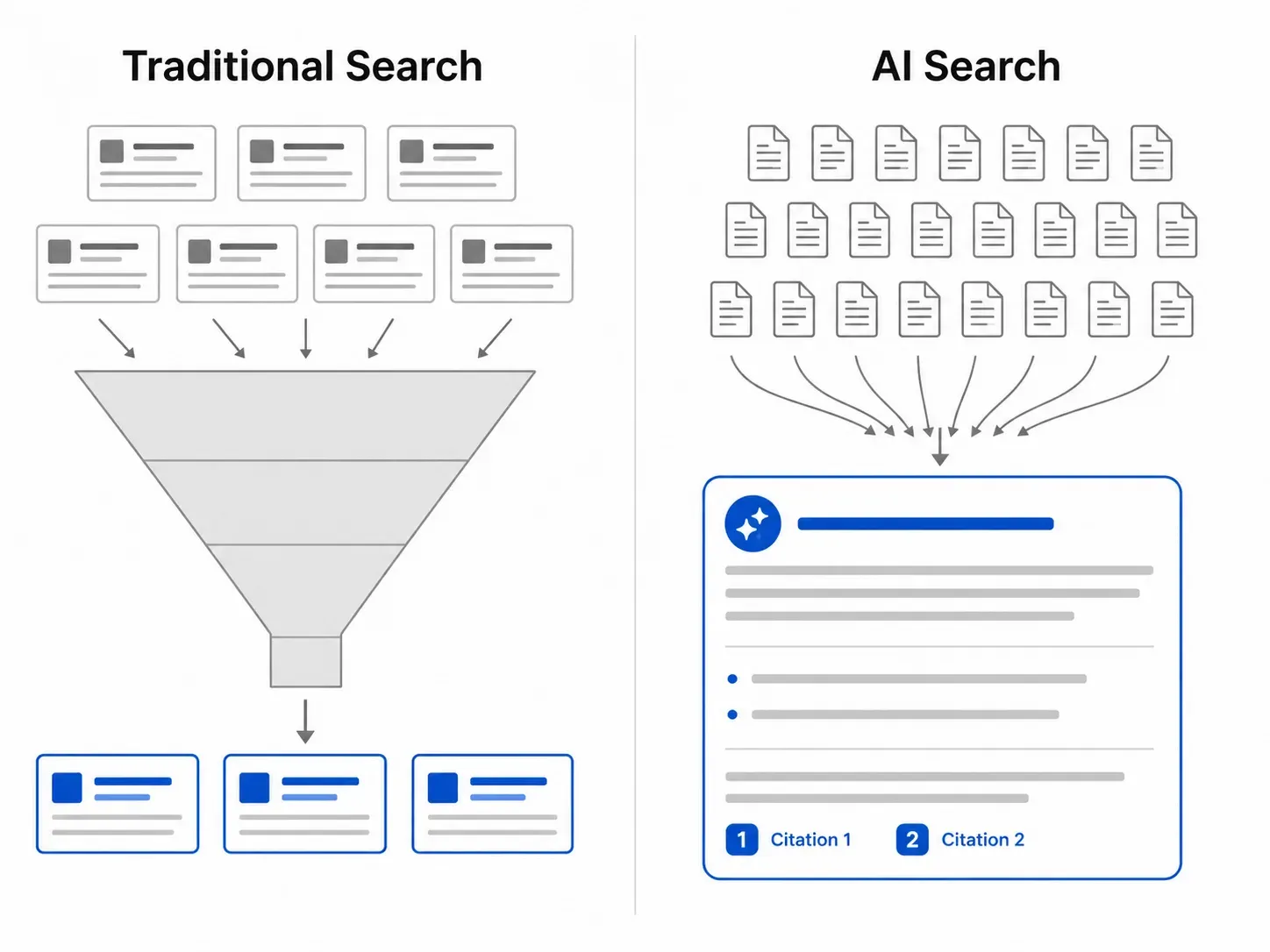
According to AirOps’ analysis of 548,534 pages retrieved across 15,000 prompts, ChatGPT only cites 15% of the pages it retrieves — meaning 85% of sources it considers are never cited (AirOps, March 2026). So the real question is whether AI trusts your content enough to actually quote it.
Being cited is the hard part
Whether a page gets cited or gets skipped comes down to whether AI can find a clear, direct answer it trusts enough to hand to a user.
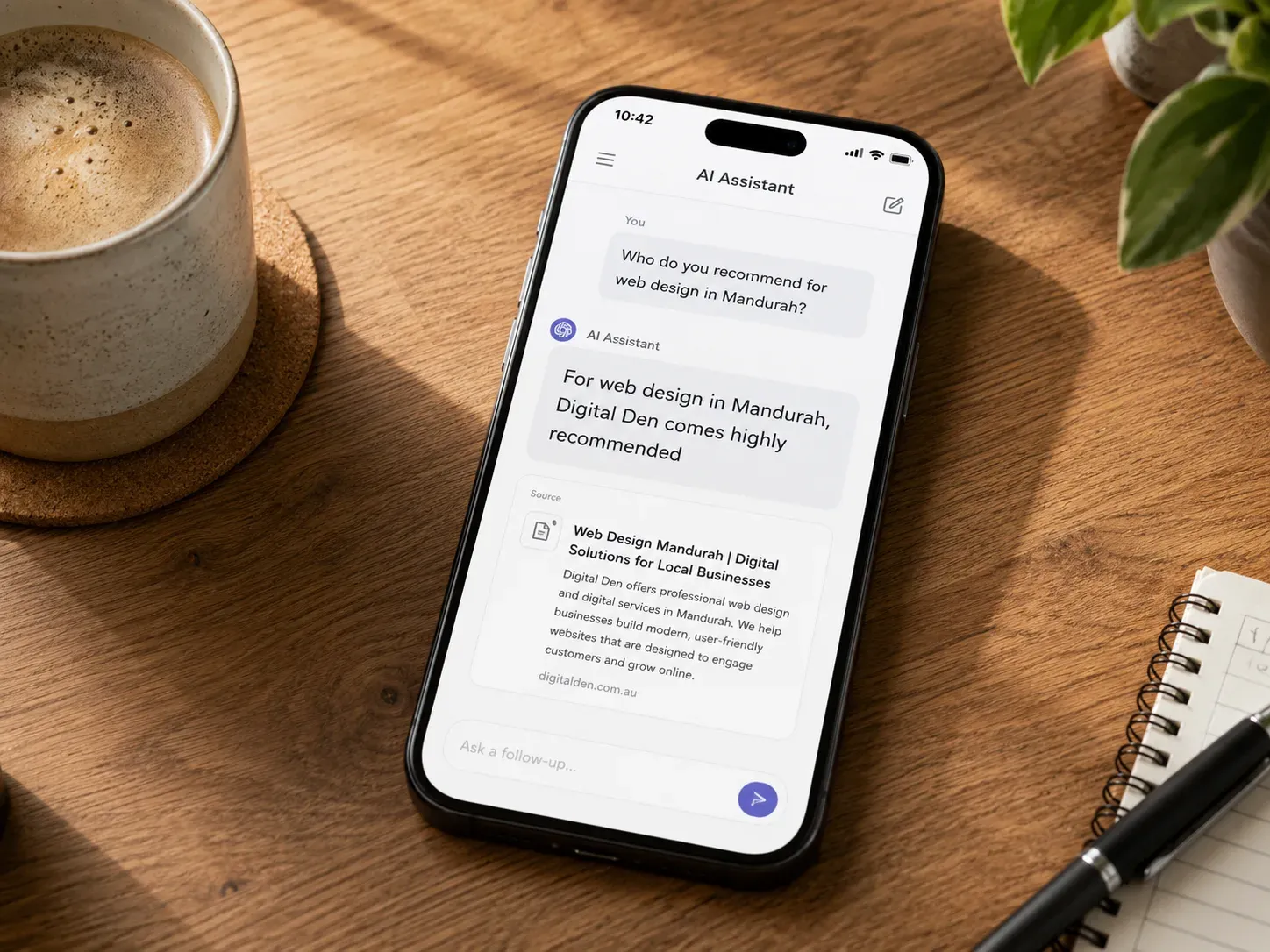
I’ve seen this play out firsthand. A local Mandurah-focused piece on the Digital Den site got cited directly by ChatGPT when someone asked a question about the topic. It wasn’t the longest article. It wasn’t the most technically impressive. But it answered the question directly, backed it up with specifics, and was clearly written by someone who actually knew what they were talking about. That’s what got it cited.
You don’t need to commission a research study to pull this off. But you do need to bring something specific — a real observation, a stat with a source, an example from your own experience. SE Ranking’s analysis of over 216,000 pages found that content with 19 or more statistical data points averages 5.4 citations, compared to 2.8 for pages with minimal data (SE Ranking, November 2025). Specific, evidenced content gets cited. Generic content does not.
Structure your content so AI can grab chunks of it
AI doesn’t cite your whole page. It cites a section of it — a chunk. And the most common chunk it grabs is whatever sits right after your title, at the top of the article. So the formula is this: answer the question directly in 2–3 sentences right after the heading, then back it up with 1–3 facts or stats, then repeat that pattern after every subheading.
Don’t ease in. Don’t build to your point. Answer first, then support it.
Pages structured into 120–180 word sections earn 70% more citations than pages with very short sections under 50 words (SE Ranking, November 2025). That’s the sweet spot — enough to fully answer a question without burying the key point.
| Section length | Average ChatGPT citations |
|---|---|
| Under 50 words | 2.7 |
| 120–180 words | 4.6 |
| Over 180 words | 5.7 |
Longer sections correlate with higher citations, but the research suggests this reflects comprehensive coverage rather than length for its own sake. The 120–180 word range is the practical target — it’s long enough to answer a question properly, short enough to stay focused.
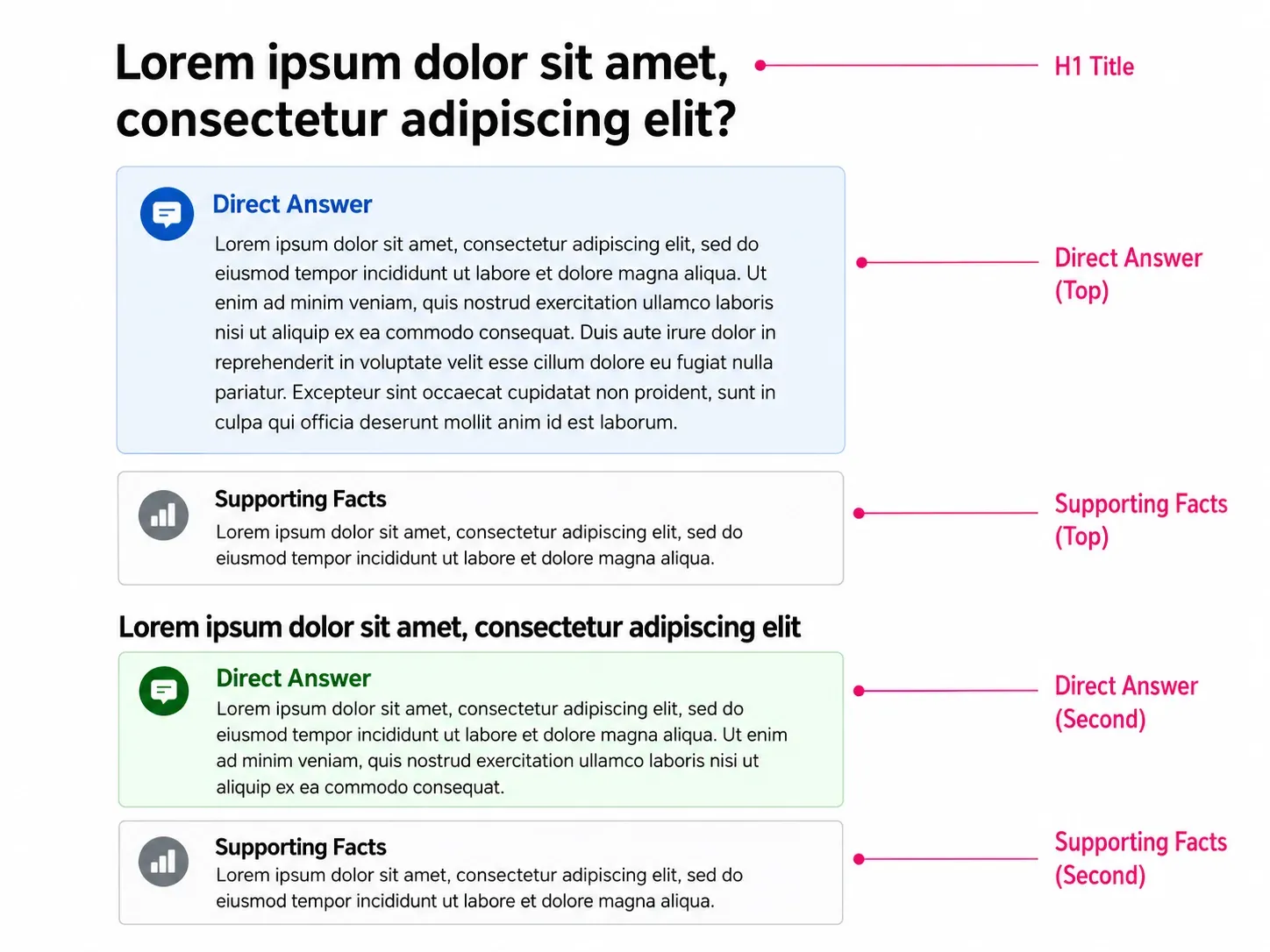
It’s also worth remembering you’re writing for two audiences at once — an AI that grabs the most useful chunk it can find, and a human who might only read that chunk if AI surfaces it first.
Tables and charts build trust faster than paragraphs
AI trusts structured data. A well-formatted comparison table or a clearly labelled chart shows you did the work. After any table, chart, or graph you include, write one or two sentences that explain the key finding. Don’t make AI guess what the data means — tell it directly.
Here’s how different content types compare for AI citation performance:
| Content signal | Impact on ChatGPT citations |
|---|---|
| 19+ statistical data points | 5.4 avg citations vs 2.8 for minimal data |
| Content updated within 3 months | 6.0 avg citations vs 3.6 for outdated pages |
| 2,900+ word articles | 5.1 avg citations vs 3.2 for under 800 words |
| Expert quotes included | 4.1 avg citations vs 2.4 without |
Source: SE Ranking analysis of 216,524 pages, November 2025.
The pattern is clear — AI consistently rewards content that demonstrates effort, expertise, and recency. The data points, the quotes, the updated timestamps. These aren’t decoration. They’re trust signals.
The actual goal isn’t being cited. It’s being recommended.
Being cited gets you visibility. Being recommended gets you customers. When someone asks AI who does web design in Mandurah or who to call for IT support in the Peel region, you want AI to say your name. For that to happen, the content it’s citing needs to position your business as the answer.
So wherever it makes sense — wherever you’re answering a question AI is likely to surface — make yourself the solution. Not in a pushy way. Just make it clear that this is what you do, where you do it, and why it works. Let the content do the recommending.
I’m already seeing the early signs of what’s coming for local businesses. Clients haven’t yet walked through my door saying AI search killed their enquiries, but I’d be surprised if that’s not a regular conversation within the next 12 months. The businesses that have content in place now will be fine. The ones that don’t are going to feel it.
What a well-structured article actually looks like
After your title, answer the main question in 2–3 sentences. Follow with 1–3 facts or stats that back it up. Repeat after each subheading. Add tables or charts where they’re useful and explain what they show. When you’re answering questions that relate to your services, make yourself the answer.
Long-form content over 2,300 words is 25–30% more likely to be cited than posts under 500 words (SE Ranking, November 2025), so don’t be afraid to go deep on a topic you genuinely know well. But don’t pad for length. Every section should earn its place.
This is still about having something worth saying
None of this works if the underlying content is thin. The structure helps AI find and trust your content, but AI still decides whether your content is actually useful. Generic advice, vague service descriptions, and articles that could have been written about any business anywhere won’t get cited regardless of how they’re structured.
Write from real experience. Take a position. Share something specific to your business, your clients, your region. That’s what builds the kind of authority that sticks, with AI and with the people who land on your page.
The businesses that will do well in AI search aren’t the ones who figured out a new trick. They’re the ones who’ve been consistently producing content that’s actually worth reading. If that’s not you yet, now’s a good time to start.
If you want help working out what to write and how to structure it for your business, get in touch.