
Every second headline is about AI taking jobs. The IMF says it’s like a “tsunami.” Tech billionaires are confidently predicting which roles will disappear first. The media runs with it because fear gets clicks.
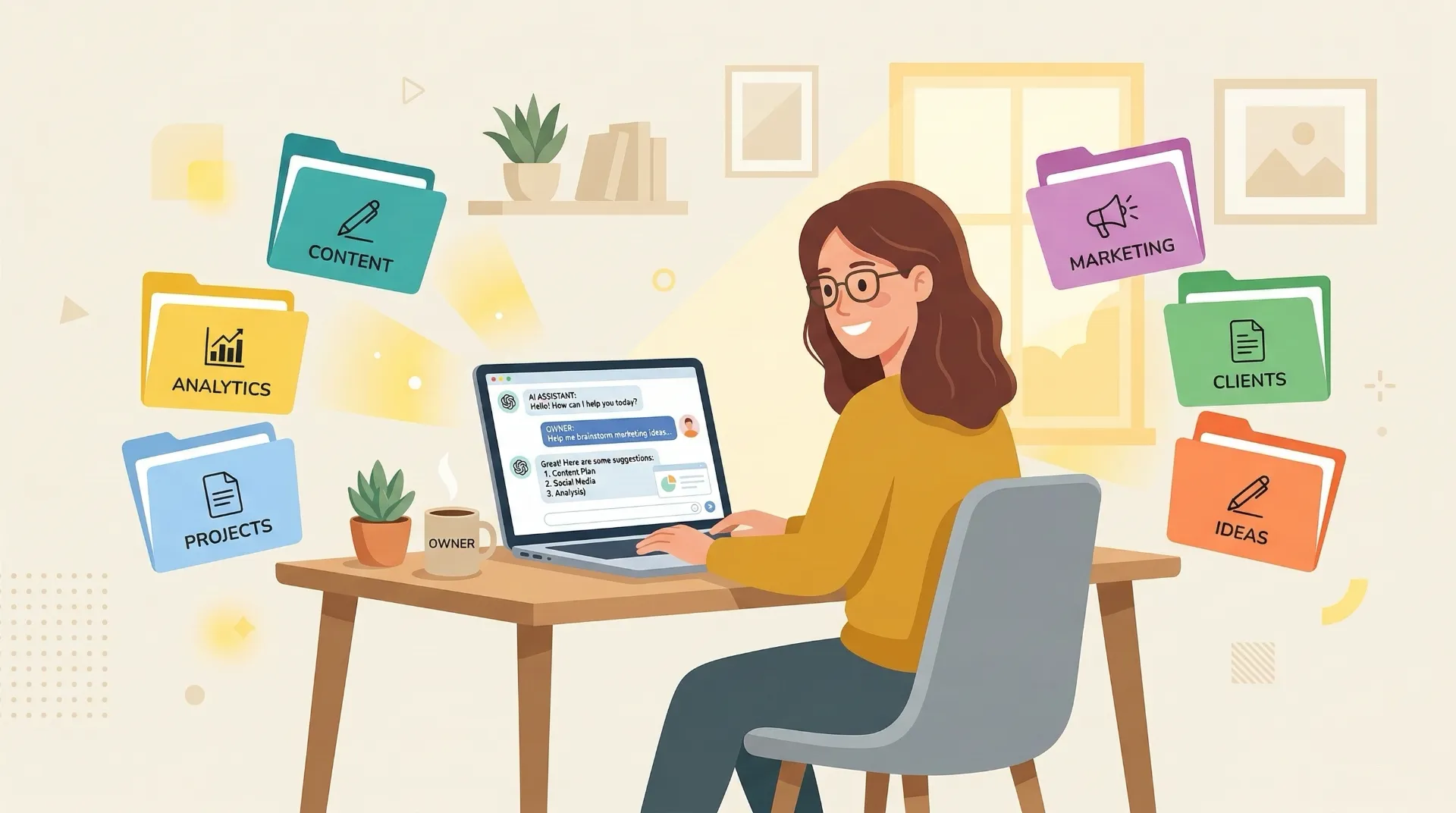
Here’s the less dramatic but more useful truth: inside most Australian small businesses right now, AI is mostly just helping people draft emails faster.
That’s it. That’s where most businesses are.
What AI Actually Does Well
Let me be specific, because vague promises about “efficiency” and “productivity” don’t help anyone.
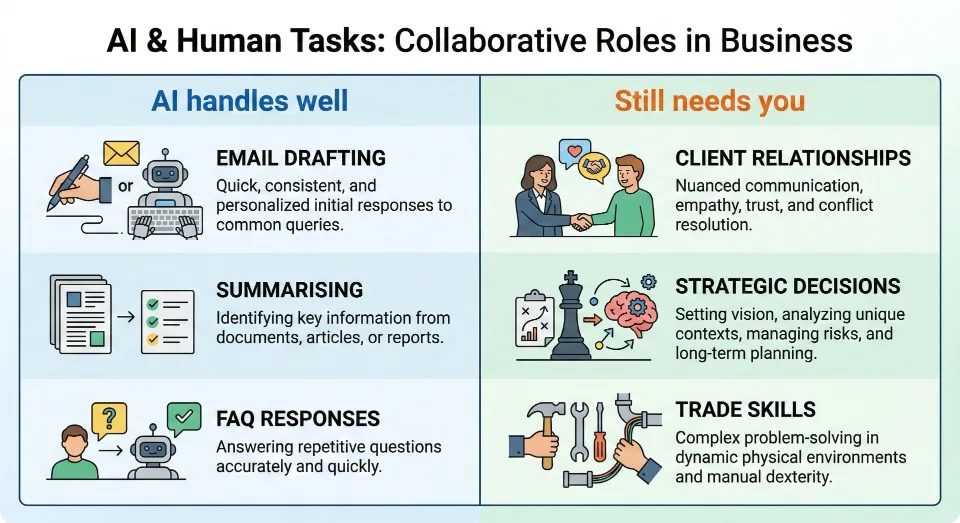
AI is genuinely good at tasks that involve processing or generating text, summarising information, answering common questions, and producing first drafts of things. It’s fast, it doesn’t get tired, and it doesn’t charge by the hour. We cover the specific tools that do this best in a separate article.
So if your day involves a lot of writing, a lot of answering the same questions, or a lot of sifting through information — AI will make that faster.
If your day involves relationship-building, complex problem-solving, physical work, or judgement calls based on years of experience — AI can support you, but it’s not replacing you anytime soon.
The Honest Middle Ground
The Reserve Bank of Australia’s own research found that for most surveyed businesses, AI was being used for exactly what you’d expect at the early stages: drafting text, summarising documents, handling routine communication.
The small group of businesses doing more sophisticated things — embedding AI into forecasting, operations, customer systems — is much smaller. And those businesses typically have more resources, more tech staff, and more time to experiment.
That’s not meant to discourage you. It’s meant to calibrate your expectations. You don’t need to be in that second group to get real value. The basics alone are genuinely useful.
What It Won’t Do
AI won’t save a bad business. If your offer isn’t compelling, if your pricing is off, if your customers don’t trust you — no amount of AI-generated content will fix that.
It also won’t think strategically for you. It’ll generate ideas, options, and drafts. But deciding which direction to take your business, what to say no to, how to position yourself in the market — that’s still yours.
And it won’t build relationships. The reason people choose a local tradie over a big company, or come back to the same cafe every week, or refer their friends to your business — that’s human. AI doesn’t touch that. (If you’re a tradie wondering how AI fits into your world specifically, we wrote a whole article just for you.)

So What Should You Actually Do?
Stop reading articles about whether AI will take your job and start asking a simpler question: what do I do every week that’s repetitive, time-consuming, and doesn’t require my specific experience or relationships?
Make a short list. Then find out if there’s an AI tool that handles it. Our article on where to actually start with AI walks you through this step by step.
Start there. Not with the future of work. Not with where AI will be in 2030. Just with the thing on your list that’s most annoying.
That’s the conversation worth having.
If you want to have it with someone who’s actually in the trenches with small businesses, not just writing about them, get in touch.