

Amazon just launched two AI healthcare products in the space of three months. And if you’re a small business owner watching from the sidelines thinking “what’s that got to do with me?” — it’s got everything to do with you.
Let me explain.
What Amazon Actually Did
In January, Amazon rolled out an AI assistant inside One Medical — their clinic network. It reads your medical history, pulls records from other providers, and basically gives doctors a summary before you even sit down.
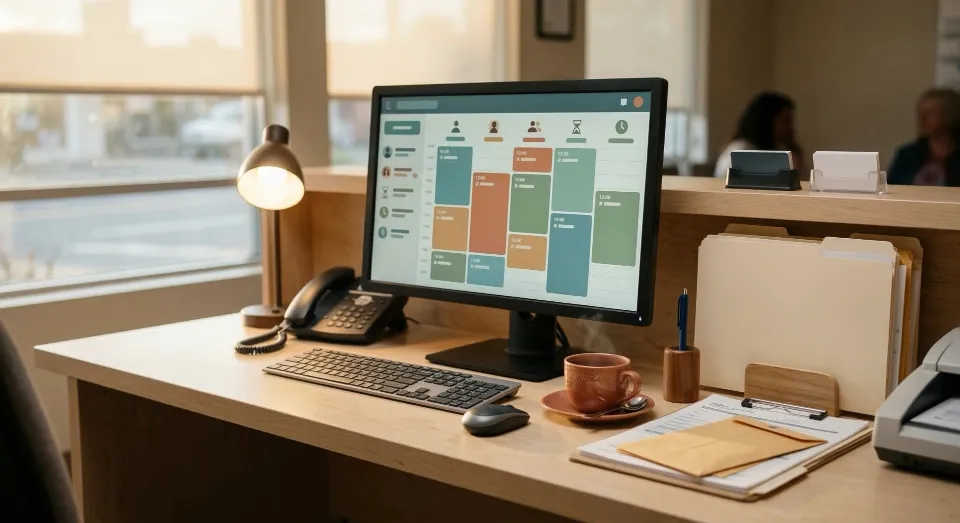
Then in early March, they launched Amazon Connect Health. This one’s different. It’s not just reading and summarising — it’s actually doing things. Scheduling appointments. Verifying patient details. Coding medical records. Amazon calls them “agentic” AI tools — meaning they don’t just summarise, they take action. The kind of admin work that eats up hours every day in any healthcare practice.
UC San Diego Health started using it and reportedly freed up over 630 hours a week that staff were spending on verification calls alone. That’s not a small number. And to address doctor skepticism, Amazon built in “evidence mapping” — every AI-generated note links back to the original transcript, so doctors can trace exactly where the AI got its information.
The Bit Nobody’s Talking About
Here’s where it gets interesting — and a bit uncomfortable.
That One Medical AI assistant doesn’t just look at your records from their clinics. It connects to Health Information Exchanges, which means it can see your medical history from other providers too. Automatically.
Now, Amazon says it’s all HIPAA-compliant. And technically, it probably is. But there’s a difference between “legally compliant” and “something people are comfortable with.” One of the biggest retail companies in the world now owns clinics, a pharmacy, and an AI that can read your entire medical history. That’s a lot of data sitting under one roof.
And patient safety organisations are paying attention. ECRI — a nonprofit that tracks health technology risks — named AI chatbot misuse as the number one health technology hazard for 2026. Not number five. Number one.

Amazon’s Own AI Problems
Here’s the kicker. Just days before the Connect Health launch, reports came out that Amazon’s internal teams were having emergency meetings about what they called “high blast radius” incidents — problems caused by AI-generated code changes in their own systems. They’ve since tightened up and now require human engineers to approve AI-generated changes.
So even Amazon doesn’t fully trust its own AI yet. And they’re rolling out AI in healthcare.
I’m not saying that to be dramatic. I’m saying it because it’s worth noticing.
Why This Matters If You Run a Small Business
You don’t need to be in healthcare for this to be relevant. Here’s what’s actually happening:
Amazon isn’t just selling AI tools. They’re building a full stack — they own the clinic, the pharmacy, the customer relationship, and now the AI that manages it all. That’s a business model, not just a product launch.
And it’s the same pattern playing out everywhere. Microsoft bought Nuance for healthcare AI. Google’s building Med-PaLM. Every major tech company is racing to own the AI layer between businesses and their customers.
If you’re running a small business, the question isn’t whether AI will affect your industry. It already is. The question is whether you’re going to be the one using it, or whether you’re going to wake up one day and realise a bigger player built the AI layer between you and your customers while you weren’t paying attention.

What I’d Actually Tell You
Don’t panic. But don’t ignore it either.
The Amazon healthcare play is a perfect case study in what AI adoption actually looks like right now — messy, fast, not fully trusted even by the people building it, but moving forward anyway.
For small business owners, the takeaway isn’t “go buy an AI tool.” It’s this: start understanding where AI fits in your business before someone else decides for you.
That might mean automating your admin. It might mean using AI to handle customer enquiries. It might mean something completely different for your specific situation. If you’re not sure where to begin, I wrote a practical guide on where to actually start with AI for your small business. But the worst thing you can do is nothing.
If you want to figure out where AI actually makes sense for your business — not the hype, just the practical stuff — that’s exactly what I help people with.