

AI-generated marketing content has a smell to it.
You know the one. Generic. Slightly too polished. Oddly enthusiastic about nothing in particular. “We are thrilled to share our commitment to excellence in delivering world-class solutions to our valued customers.”
Nobody talks like that. And nobody trusts businesses that do.
Here’s the thing though — the problem isn’t AI. The problem is how people use it.
The Mistake Everyone Makes
Most people open ChatGPT and type something like: “Write me a Facebook post about my plumbing business.”
And they get back exactly what you’d expect — something technically correct, completely soulless, and indistinguishable from a thousand other plumbing businesses.
The output is only as good as the input. And “write me a post about my business” is a terrible input. (This is also why AI can’t build your website properly on its own — context matters.)
How to Get Content That Actually Sounds Like You
Give it context. Real context.
Tell it who you’re talking to. Tell it the problem that person has. Tell it your actual opinion on that problem. Tell it the tone — casual, direct, not corporate.
Here’s the difference:
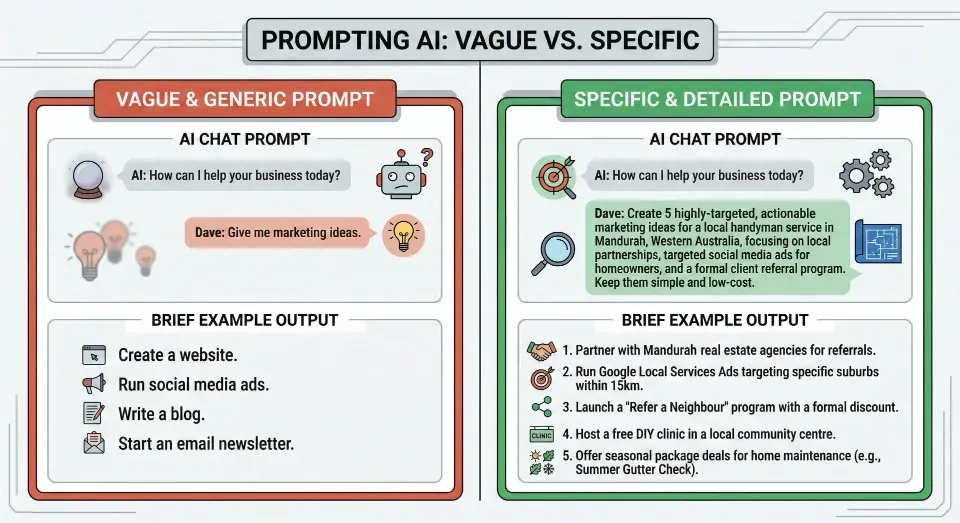
Bad prompt: “Write a social media post about our HVAC maintenance service.”
Better prompt: “Write a short Facebook post for a Mandurah electrician targeting homeowners who’ve been putting off getting their switchboard checked. Tone should be direct and practical, not salesy. I want to come across as someone who tells it straight. One specific warning, one clear CTA.”
Same AI. Completely different output.
Always Edit. Always.
Even with a good prompt, AI doesn’t know your specific stories, your specific customers, or the local context that makes your business real to your community.
The best approach is to treat AI as a fast first draft. It gets you 70% of the way there in 30 seconds. You do the last 30% — the bit that makes it sound like a person wrote it.
That last 30% is usually adding:
A specific detail from real experience. (“Last week I had a customer who…”)
A local reference that grounds it. (“If you’re in Mandurah or the Peel region…”)
Your actual opinion. Not a qualified corporate non-opinion — a real view.
That’s the bit AI can’t do. Not because it’s not capable, but because it doesn’t have your twenty years of experience or your relationship with your community.
What AI Is Actually Good at in Marketing
Writing variations. You want three different versions of an email subject line? AI spits out ten in under a minute. Then you pick the one that sounds right.
Overcoming blank page syndrome. Starting is the hard part. Having a draft — even an imperfect one — is massively faster than staring at an empty document.
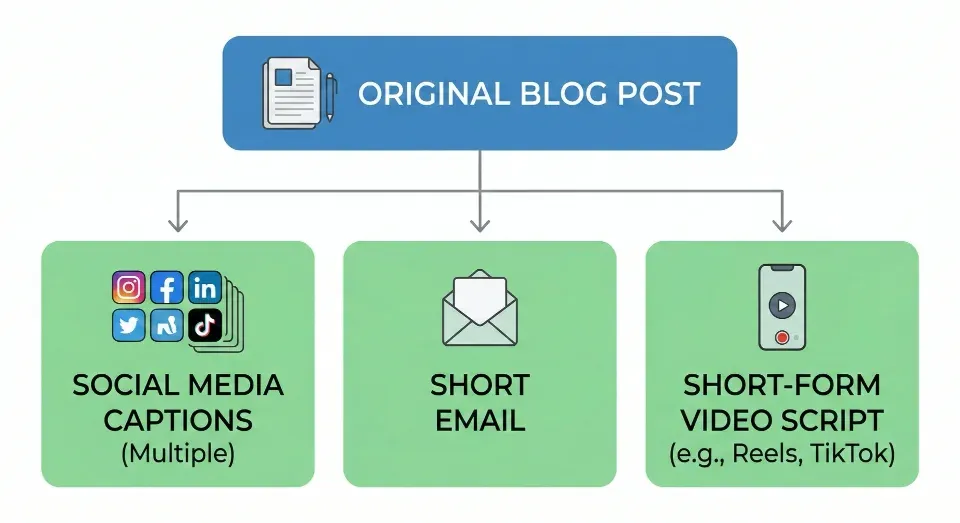
Repurposing content. You wrote a detailed blog post? AI can turn it into five social captions, a short email, and a script for a quick Reel. That’s legitimate time saving. Check out how AI tools can help your business for more practical examples like this.
Answering common questions. FAQ content, chatbot responses, auto-reply templates — this is where AI handles repetitive writing work really well.
The Part That Still Has to Be Human
Your story. Why you started. What you stand for. The client you helped when it really mattered. The thing you won’t do because it’s not right for the customer.
That stuff doesn’t come from AI. It comes from you. And it’s the difference between a business people buy from once and a business people come back to and refer.
Use AI for the volume work. Keep the human stuff human. If you want to understand what AI can realistically handle and what it can’t, our article on AI won’t replace you breaks that down honestly.
If you want help building a content approach for your business that actually sounds like you, let’s talk. That’s something I can help with.